← All Products
PRODUCT

ROLLER CHAINS.

Simplex, duplex and attachment roller chains from TI Diamond, Renold, Rolon and Galaxy.

A roller chain runs on sprockets to carry power from one shaft to another. It is the standard drive chain on industrial machinery.

We have dealt in roller chains in Bengaluru since 1983. Send us the chain number or pitch and the length you need, and we will come back to you with details.

Roller Chains

IN THE RANGE

Photos of Roller Chains.

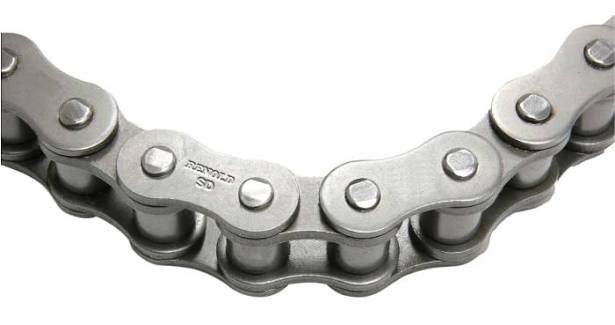
Renold roller chain

Renold roller chain

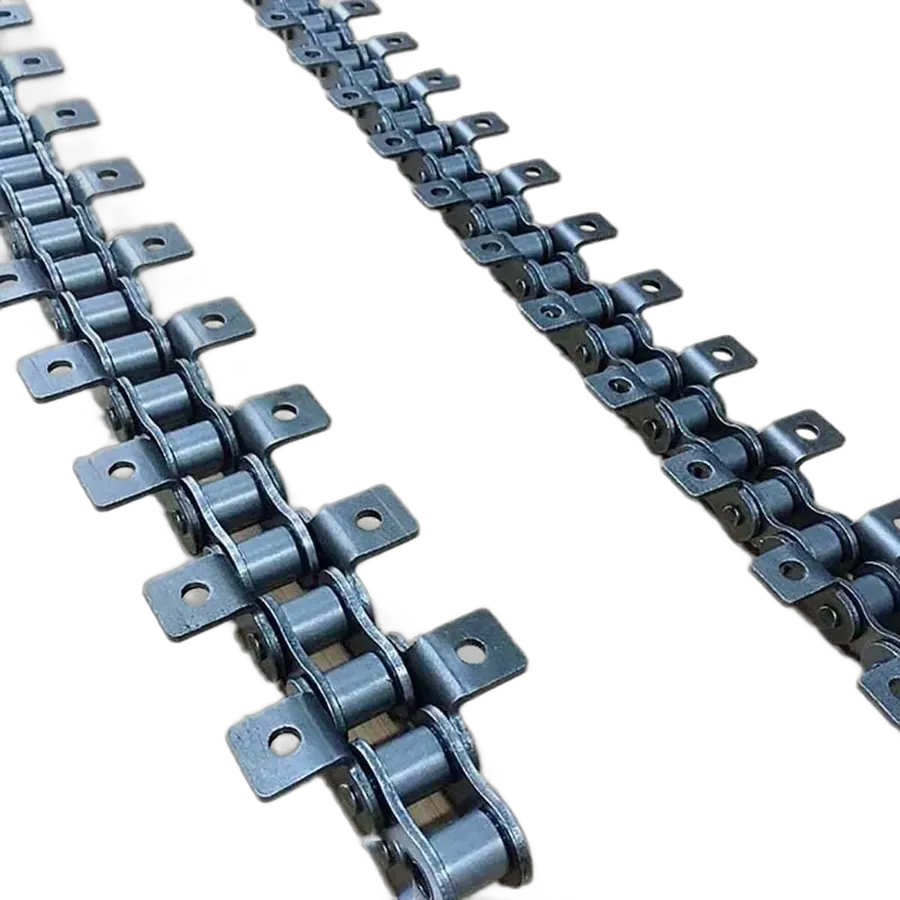
Attachment roller chain

Attachment roller chain

Stainless steel roller chain

Stainless steel roller chain

DETAILS

Brand, specifications and downloads.

Brand
TI Diamond, Renold, Rolon, Galaxy and imported
Catalogue / brochure
Renold catalogue ↓Diamond catalogue ↓
Applications
Agriculture, Food processing, Textile, Sugar, Cement, Steel, Mining
Types
Simplex, duplex, attachment; Renold Syno lubrication-free chain
Material
Steel, stainless steel (SS 304)
Pitch
Renold: 3/8 inch to 2 inch. Other makes: 1/4 inch to 3 inch.

TYPES WE SUPPLY

Which roller chain suits which job.

TypeWhat it isUse it for
Simplex, duplex, triplexOne, two or three strands of rollers on common pinsPower drives. More strands carry more power without moving to a larger pitch, so the sprockets stay small.
Attachment chainStandard chain fitted with bent (wing) or straight attachment plates, or extended pins, at set intervalsConveyors that carry, push or hold products: packaging, food, bottling and assembly lines
Stainless steel (SS 304)Chain made from corrosion-resistant stainless steelWet, washdown and food areas. Stainless is softer than carbon steel, so it carries less load for its size.
Renold SynoRenold lubrication-free chainDrives where regular oiling is impractical, or where oil would contaminate the product

COMMON SIZES

Pitch, roller diameter and inner width, in millimetres.

British Standard (B series) and American Standard (ANSI) chains share some pitches but differ in roller diameter and inner width, so they are not interchangeable. Measure all three before you order.

ChainStandardPitchRoller dia.Inner width
06BBritish9.525 (3/8")6.355.72
08BBritish12.70 (1/2")8.517.75
10BBritish15.875 (5/8")10.169.65
12BBritish19.05 (3/4")12.0711.68
16BBritish25.40 (1")15.8817.02
40ANSI12.70 (1/2")7.927.85
50ANSI15.875 (5/8")10.169.40
60ANSI19.05 (3/4")11.9112.58
80ANSI25.40 (1")15.8815.75

Roller diameter is the maximum and inner width the minimum, as listed in the TI Diamond catalogue (ISO 606). For more sizes, how to measure pitch accurately and how to read chain numbers, see our roller chain size guide.

CHOOSING A CHAIN FOR A NEW DRIVE

The checks chain makers use when sizing a drive.

  1. Start with the power and speed. Note the motor power in kW, the speed of the small (driving) sprocket in rpm, and the speed ratio you need.
  2. Allow for the type of load. A smooth drive from an electric motor needs no extra allowance; drives with shocks, such as crushers, or driven by engines, need a service factor that raises the design power. The factors are in the chain catalogues on this page.
  3. Give the small sprocket enough teeth. Use at least 17 teeth for normal drives, and 19 to 25 for higher speeds or smoother running. Fewer teeth make the chain run roughly and wear faster.
  4. Keep the ratio sensible. A single chain drive works best up to about 7:1. For larger ratios, use two stages.
  5. Set the centre distance. Aim for 30 to 50 times the chain pitch between the shafts, with the chain wrapping at least 120 degrees round the small sprocket.
  6. Use an even number of links, so the chain can be joined with a standard connecting link instead of a weaker offset link.
  7. Check the power rating. Read the chain size off the maker power-rating chart for your design power and small-sprocket speed, and plan the lubrication method the chart calls for.

Send us the motor power, speeds and shaft distance, and we can suggest a chain and sprocket set from the Renold or Diamond range.

FITTING AND CARE

Simple habits that make a chain last.

  • Line up the sprockets. Both sprockets must sit in the same plane on parallel shafts. Check with a straight edge across the sprocket faces.
  • Set the slack. On a horizontal drive, leave a small sag on the slack side, about 2% of the centre distance. Too tight wears the chain and bearings; too slack lets it whip and jump teeth.
  • Fit the connecting link clip correctly. The closed end of the spring clip faces the direction of travel.
  • Lubricate where the wear happens. Oil must reach between the pins and bushes. Apply it to the slack side, at the edges of the inner and outer plates.
  • Check wear regularly. Replace the chain at 3% elongation on most drives, and check the sprocket teeth at the same time. Never join new chain to worn chain.
  • Guard and clean. Dust mixed with oil makes a grinding paste. Fit guards and clean the chain in dirty conditions.

COMMON PROBLEMS

What the symptoms usually mean.

SymptomLikely causesWhat to do
Chain climbs or jumps the teethWorn (elongated) chain, worn sprockets, too much slackMeasure elongation; replace the chain, and the sprockets if worn; set the slack
Noisy runningMisaligned sprockets, wrong tension, no lubrication, worn chainAlign the sprockets, adjust the slack, lubricate, check wear
Wear on the side plates or sprocket facesSprockets out of lineRealign the shafts and sprockets
Stiff linksRust, dirt, lack of lubricationClean and lubricate; replace the chain if links stay stiff
Broken plates or pinsShock overload, fatigue, chain too small for the driveCheck the chain size and service factor; replace the whole chain
Fast wearPoor lubrication, dirt, too few teeth on the small sprocketImprove lubrication and guarding; use a larger small sprocket

WHAT TO TELL US

Include these in your message and we can answer faster.

01

The chain number

The number stamped on the side plate of the old chain, such as 08B or 40.

02

The pitch

If the number is worn off, measure from the centre of one pin to the next.

03

Simplex or duplex

How many rows of rollers the chain has.

04

The length

In feet, metres or number of links, and whether you need a connecting link.

QUESTIONS

Answers to what buyers ask us most.

Read the number stamped on the side plates, such as 08B-1 or 40. If it has worn off, measure the pitch: the distance between the centres of two neighbouring pins. Common pitches are 3/8, 1/2, 5/8, 3/4 and 1 inch. Also measure the roller diameter and the width between the inner plates, because two chains with the same pitch can still differ. Send us these three measurements, or a photo of the chain next to a ruler.

There are two standards. In European (British Standard, B series) numbers, the first two digits give the pitch in sixteenths of an inch, so 08B is 8/16 = 1/2 inch. In American (ANSI) numbers, the first digit or digits give the pitch in eighths of an inch, so 40 is 4/8 = 1/2 inch. The number after the dash is the number of strands: -1 is simplex, -2 is duplex and -3 is triplex.

No. Both have a 1/2 inch pitch, but an 08B chain has 8.51 mm rollers and 7.75 mm between the inner plates, while an ANSI 40 chain has 7.92 mm rollers and 7.85 mm between the plates. They do not sit correctly on each other's sprockets. Replace a chain with the same standard, or change the sprockets as well.

It is the number of strands running side by side on one set of pins. A duplex chain has about twice the strength of a simplex chain of the same pitch, and a triplex about three times, so they carry more power in the same space. The sprockets must have the same number of strands as the chain.

A chain wears as its pins and bushes wear, which makes it longer. Replace it when it has grown by 3% for most industrial drives, or by about 1.5% on drives with fixed centre distances, chains running in parallel, or where smooth running matters. To check a 1/2 inch pitch chain, measure 20 pitches under tension: new it measures 254 mm, and at 3% wear about 261.6 mm. Do not join a new length onto a worn chain.

Check them first. If the teeth are hooked, pointed or thinned, or the old chain was riding high on the teeth, replace the sprockets too. Worn sprockets wear out a new chain quickly.

Use stainless steel where the chain gets wet or washed down, or is exposed to chemicals, such as in food processing. It resists corrosion, but stainless steel is softer than carbon steel, so its strength and wear life are lower. You may need a larger size than the carbon steel chain it replaces.

It depends on the speed and power of the drive. Slow drives can be oiled by hand or by drip, medium-speed drives run in an oil bath or with a slinger disc, and fast, high-power drives need a pump to spray oil onto the chain. The oil has to reach the gap between the pins and bushes, where the wear happens.

Kutbi Chain Centre, 16 Sadar Patrappa Road (SP Road), Bengaluru, has supplied roller chains since 1983. We stock TI Diamond, Renold, Rolon and Galaxy chains in simplex, duplex, attachment and stainless steel types. Call or WhatsApp +91 96110 40034 with the chain number or size.

OTHER CATEGORIES

More from our range.

Conveyor Chains+

Conveyor Chains

View →

Leaf chains, conveyor chains, slat chains, drag chains, PIV gearbox chains and honeycomb wire mesh belts.

Chain Sprockets+

Chain Sprockets

View →

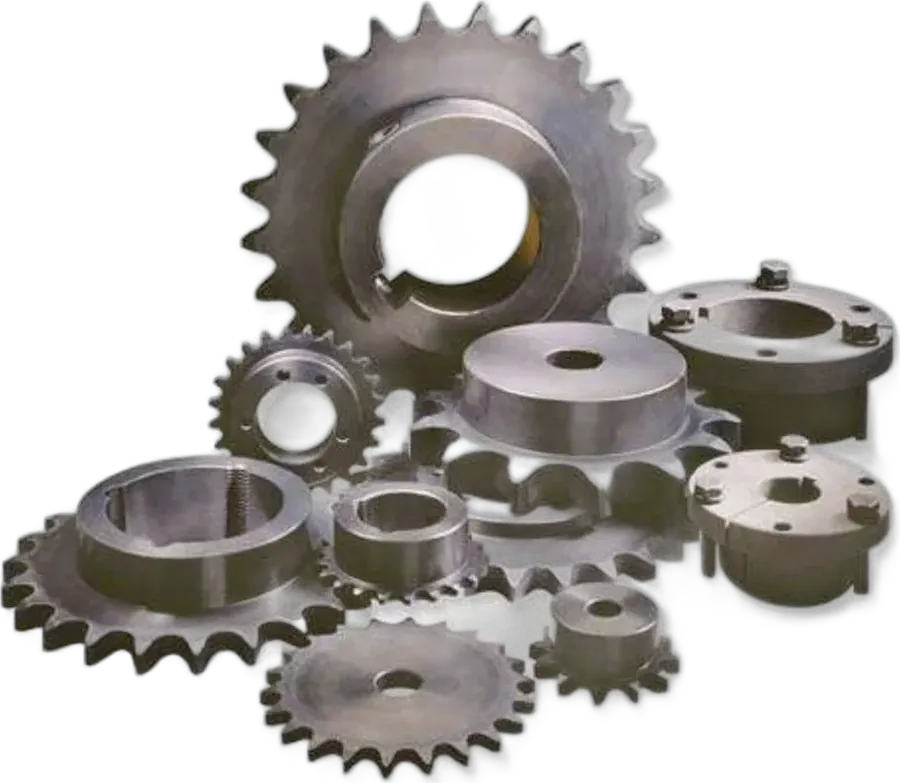
Simplex, duplex, triplex, double single and split sprockets for roller and conveyor chains.

Bearings+

Bearings

View →

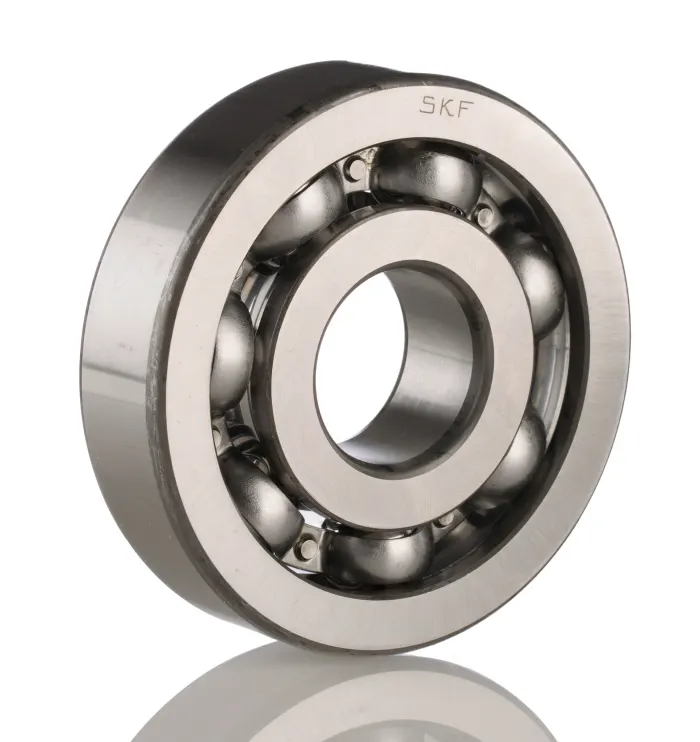
Ball bearings, roller bearings and bearing blocks from SKF, FAG, NBC, NTN and TR.