← V-Belts & Pulleys
PRODUCT

V-BELT & TAPER
LOCK PULLEYS.

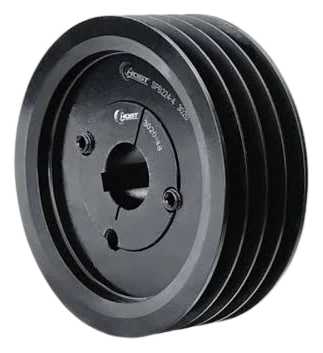
Cast iron V-belt pulleys and taper lock pulleys with bushes, for A, B, C, D and SPA, SPB, SPC section belts.

V-belt pulleys carry the belts on the motor and machine shafts. Taper lock pulleys fit onto the shaft with a split tapered bush, tightened with an Allen key, so there is no re-boring or keyway cutting and the same pulley can be moved to a different shaft size by changing the bush.

Send us the belt section, number of grooves, pitch diameter and shaft size, and we will come back to you with details.

V-Belt & Taper Lock Pulleys

IN THE RANGE

Photos of V-Belt & Taper Lock Pulleys.

Four-groove taper lock pulley with its bush

Four-groove taper lock pulley with its bush

DETAILS

Brand, specifications and downloads.

Catalogue / brochure
Fenner taper lock pulley catalogue ↓
Applications
Motor and pump drives, Fans and blowers, Compressors, Conveyors and machine drives
Types
V-groove pulleys, taper lock pulleys and taper lock bushes
Taper lock pulleys
SPA, SPB and SPC sections, 1 to 11 grooves, 75 mm to 600 mm outside diameter
Cast iron V pulleys
A, B, C and D sections, solid or hollow (arm) type, 1 to 10 grooves
Material
Cast iron
Minimum pitch diameter
A section 80 mm, B 125 mm, C 200 mm
Fenner range
Over 400 standard sizes, grooves to IS and ISO specifications
Source of figures
JK Fenner Taper-Lock Dual Duty Pulleys catalogue

FITTING A TAPER LOCK BUSH

Step by step.

  1. Clean the bore of the pulley, the outside of the bush and the shaft. Remove oil and paint from the taper.
  2. Put the bush into the pulley and line up the holes, so each screw sits in a hole threaded on the pulley side only.
  3. Oil the screw threads lightly and screw them in loosely.
  4. Slide the assembly onto the shaft with the key fitted, and position it in line with the other pulley.
  5. Tighten the screws alternately, a little at a time, to the torque given for the bush size. The bush grips the shaft as it is pulled into the taper.
  6. Recheck the screws after the drive has run for a short time under load.

To remove it, take out the screws, put one into the removal hole (threaded on the bush side), and tighten it to push the bush out of the taper.
IS THE PULLEY WORN?

Worn grooves shorten belt life.

  • Dished groove walls: run a finger down the groove side. It should be straight; a curved, shiny wall is worn.
  • Belt sitting low: a new belt that sinks to the bottom of the groove means the groove is worn wide.
  • Groove gauges for each section show wear quickly; ask us if you need to check a pulley.
  • Cracks or chips on a cast iron pulley mean it must be taken out of use; never weld cast iron pulleys.

WHAT TO TELL US

Include these in your message and we can answer faster.

01

The belt section

A, B, C, SPA or the section on the belt.

02

The grooves and diameter

Number of grooves and the pitch or outside diameter.

03

The shaft

Shaft diameter and keyway, or the taper lock bush number.

04

The quantity

How many you need.

QUESTIONS

Answers to what buyers ask us most.

A pulley with a tapered bore that takes a split taper lock bush. The bush is bored for the shaft; tightening its screws with an Allen key squeezes it onto the shaft, holding the pulley like a shrink fit. Changing the bush moves the pulley to a different shaft size.

It depends on the belt section, the number of belts and the speed ratio. Keep the pulley above the minimum pitch diameter for the section (A 80 mm, B 125 mm, C 200 mm): smaller pulleys bend the belts too sharply and shorten their life.

Multiply the motor speed by the motor pulley diameter and divide by the driven pulley diameter. A 1440 rpm motor with a 100 mm pulley driving a 200 mm pulley turns it at about 720 rpm.

OTHER CATEGORIES

More from our range.

Roller Chains+

Roller Chains

View →

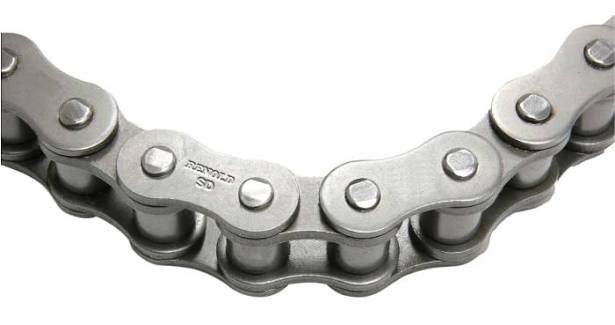
Simplex, duplex and attachment roller chains from TI Diamond, Renold, Rolon and Galaxy.

Conveyor Chains+

Conveyor Chains

View →

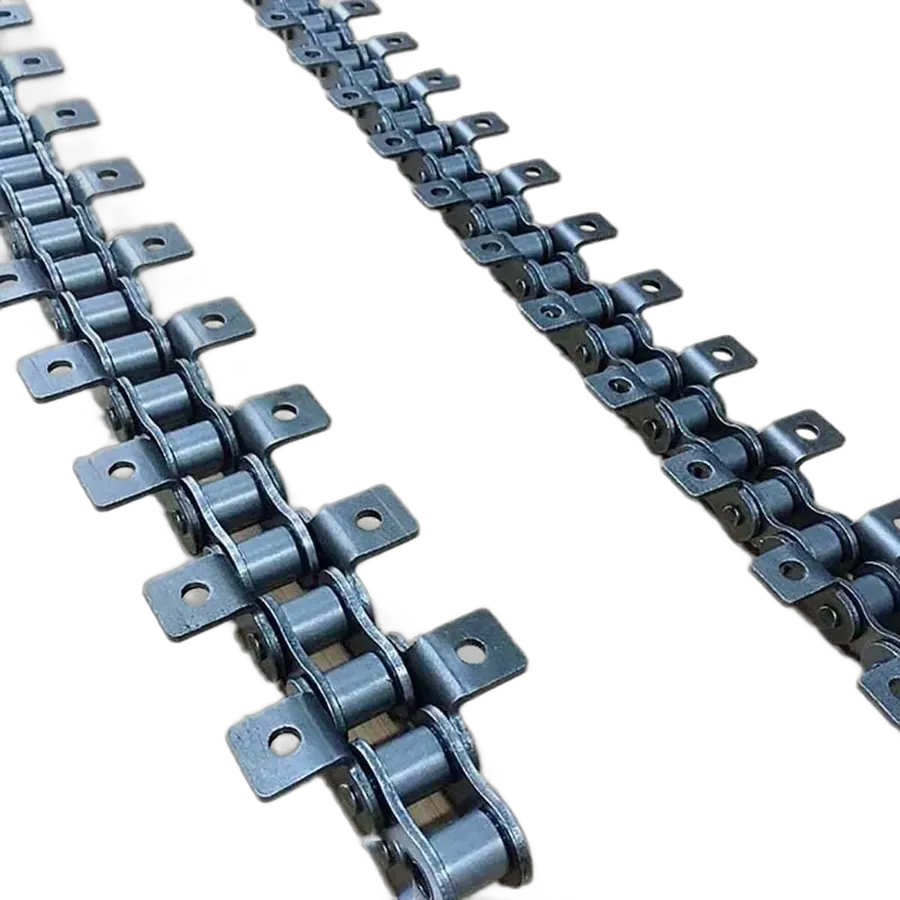
Leaf chains, conveyor chains, slat chains, drag chains, PIV gearbox chains and honeycomb wire mesh belts.

Chain Sprockets+

Chain Sprockets

View →

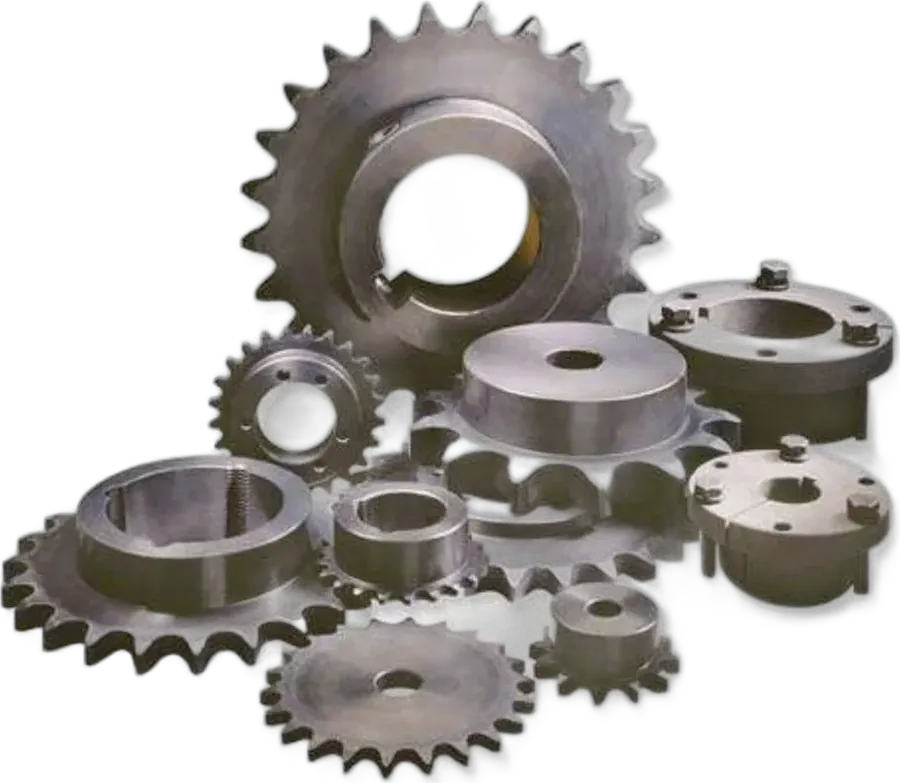
Simplex, duplex, triplex, double single and split sprockets for roller and conveyor chains.