← V-Belts & Pulleys
PRODUCT

TIMING BELTS.

Toothed timing belts in rubber and PU, for drives that must not slip.

Timing belts have teeth that mesh with toothed pulleys, so they transmit power without slip and keep the driven shaft in step with the driver. They need no lubrication and run quietly.

Send us the marking on the old belt, such as 480-8M-50 or 240L050, and we will come back to you with details.

Timing Belts

IN THE RANGE

Photos of Timing Belts.

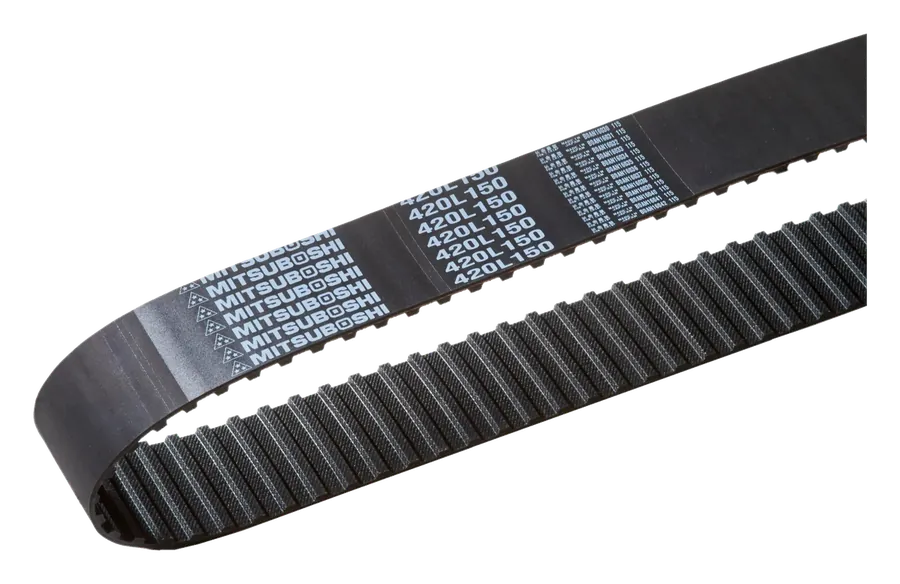
Timing belt 420L150: 42.0 inch pitch length, L pitch, 1.5 inch wide

Timing belt 420L150: 42.0 inch pitch length, L pitch, 1.5 inch wide

DETAILS

Brand, specifications and downloads.

Catalogue / brochure
Fenner timing belt catalogue ↓
Applications
Packaging and printing machines, Textile machines, Conveyors and automation, Machine tools
Types
Rubber timing and HTD belts; PU timing belts
Tooth profiles
Trapezoidal (such as L) and curved HTD (such as 8M)
How sizes are written
480-8M-50 = 480 mm pitch length, 8 mm pitch, 50 mm wide. 240L050 = 24.0 inch pitch length, L pitch, 1/2 inch wide.
Source of figures
JK Fenner Designation of Belts sheet

COMMON TOOTH PROFILES

The pitch is the distance between neighbouring teeth.

ProfilePitchType
MXL2.032 mmTrapezoidal, inch series
XL5.08 mm (1/5 inch)Trapezoidal, inch series
L9.525 mm (3/8 inch)Trapezoidal, inch series
H12.7 mm (1/2 inch)Trapezoidal, inch series
3M, 5M, 8M, 14M3, 5, 8 and 14 mmCurved (HTD) teeth, metric, for higher power
T5, T105 and 10 mmTrapezoidal metric, often in PU

The belt and pulleys must have the same profile and pitch. Curved and trapezoidal teeth do not mix, even at a similar pitch.
MEASURING AN UNMARKED BELT

Three things identify it.

  1. Pitch: measure across ten teeth and divide by ten, and note whether the teeth are trapezoidal or rounded.
  2. Length: count the teeth; the number of teeth times the pitch gives the pitch length.
  3. Width: measure across the belt.

FITTING TIPS

Timing belts are easy to damage before they ever run.

  • Do not kink or crimp the belt or bend it tighter than the smallest pulley; it breaks the tension cords.
  • Never lever it over a flange; slacken the centre distance instead.
  • Align the pulleys carefully, so the belt does not ride hard against the flanges.
  • Tension it moderately: too slack and it can jump teeth, too tight and it wears and loads the bearings.

WHAT TO TELL US

Include these in your message and we can answer faster.

01

The belt marking

Printed on the belt, for example 480-8M-50.

02

The material

Rubber or PU.

03

The width

If the marking has worn off, the width, tooth spacing and number of teeth.

04

The quantity

How many you need.

QUESTIONS

Answers to what buyers ask us most.

480 is the pitch length in mm, 8M is the tooth profile and pitch (8 mm between teeth), and 50 is the belt width in mm. For inch belts such as 240L050, 240 is the pitch length in tenths of an inch (24.0 inches), L is the pitch and 050 is the width (1/2 inch).

A V-belt can slip slightly under load. A timing belt cannot, because its teeth lock into the pulley, so it is used where shafts must stay in step, such as in packaging, printing and indexing machines.

OTHER CATEGORIES

More from our range.

Roller Chains+

Roller Chains

View →

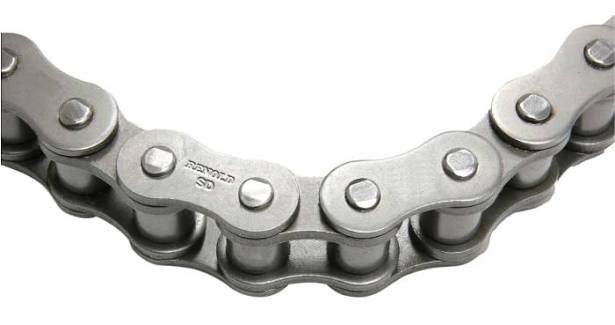
Simplex, duplex and attachment roller chains from TI Diamond, Renold, Rolon and Galaxy.

Conveyor Chains+

Conveyor Chains

View →

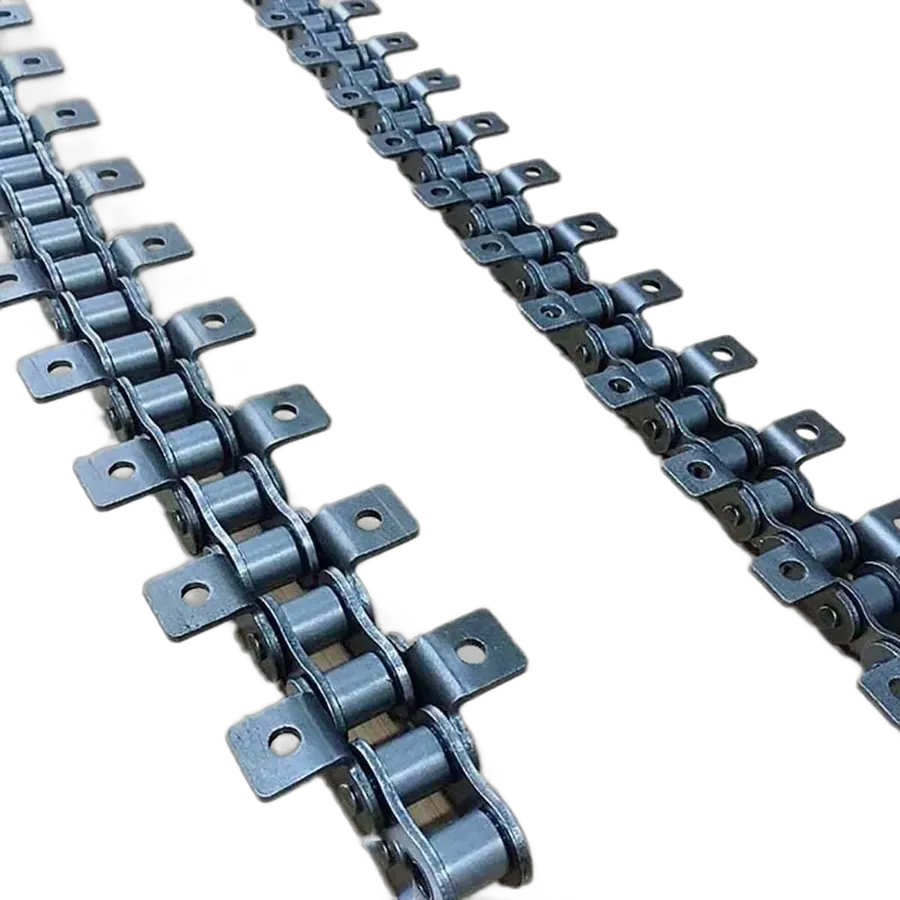
Leaf chains, conveyor chains, slat chains, drag chains, PIV gearbox chains and honeycomb wire mesh belts.

Chain Sprockets+

Chain Sprockets

View →

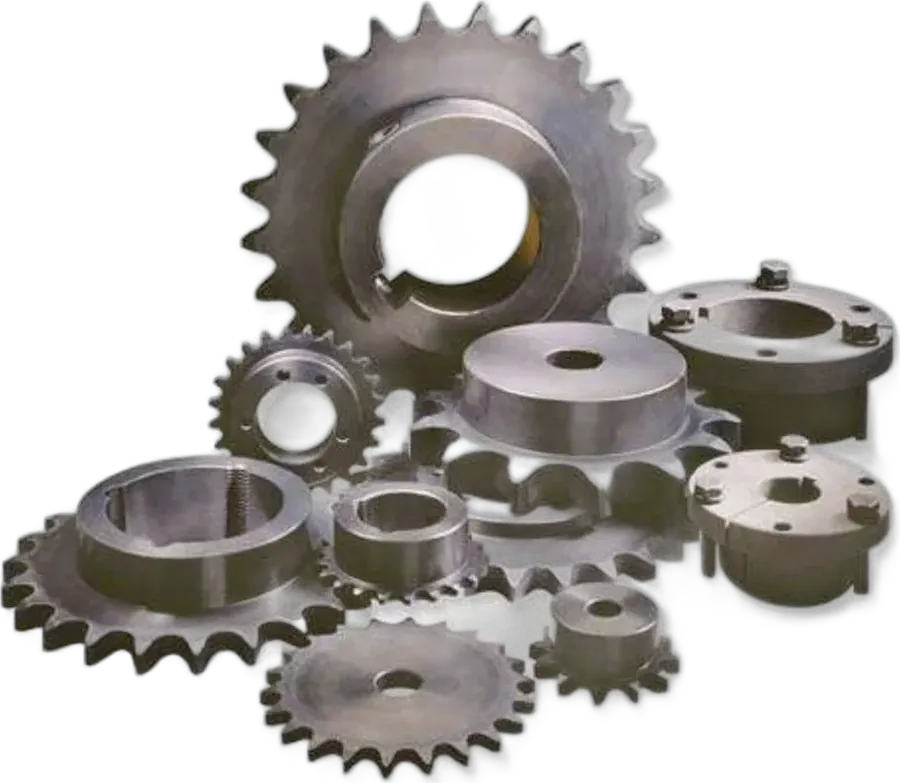
Simplex, duplex, triplex, double single and split sprockets for roller and conveyor chains.