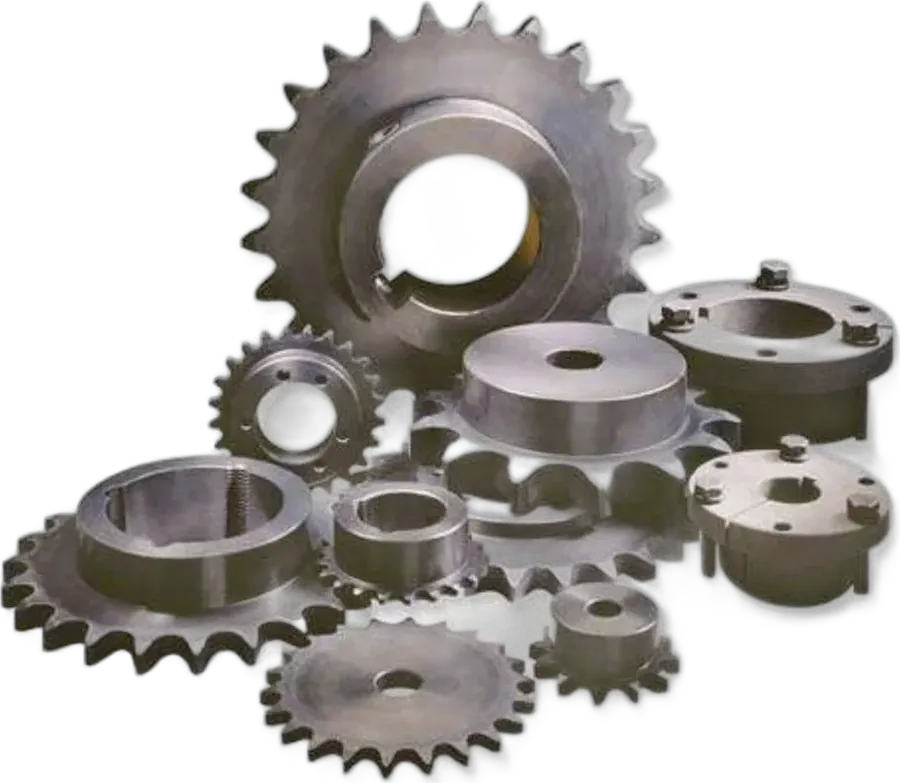
← Gears
PRODUCT

SPUR GEARS.

Industrial spur gears and pinions in metric module and inch diametral pitch.

Spur gears have straight teeth cut parallel to the shaft. They join parallel shafts, are simple to make and run efficiently, and are used in gearboxes, machine tools, pumps and conveyors.

Send us the module (or DP), number of teeth, face width, bore and keyway, or the old gear, and we will come back to you with details.

Spur Gears

IN THE RANGE

Photos of Spur Gears.

Spur gears with keyways

Spur gears with keyways

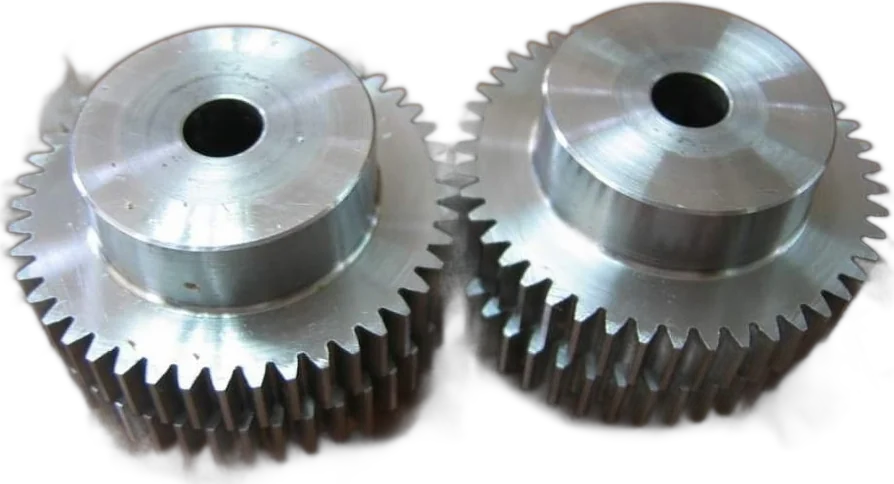
Pair of spur gears with hubs

Pair of spur gears with hubs

DETAILS

Brand, specifications and downloads.

Applications
Gearboxes, Machine tools, Pumps, Conveyors, Printing machines
Tooth system
Metric module or inch diametral pitch (DP)
Pressure angle
20 degrees as standard; 14.5 degrees for older inch gears
Material
Steel such as EN8 or EN19, cast iron, or bronze

MEASURING A SPUR GEAR

What to measure on the old gear.

MeasurementHow
Number of teethCount them; mark a starting tooth with chalk
Outside diameterAcross the tooth tips with a vernier caliper. On a gear with an odd number of teeth no two tips sit exactly opposite, so the reading is slightly small; tell us the tooth count and we will allow for it
ModuleOutside diameter ÷ (teeth + 2); a result close to a standard module such as 1.5, 2, 2.5 or 3 confirms it
Face widthThe width of the teeth
Bore, keyway and hubBore diameter, key width, and the hub diameter and length

If the module calculation does not give a round figure, the gear may be inch (DP) or have corrected teeth; send us a photo and the measurements.
CHOOSING THE MATERIAL

Match the material to the load.

MaterialSuits
EN8 (medium carbon steel)General gears; can be surface hardened
EN19 (alloy steel)Heavily loaded gears and pinions; heat treated for strength
Cast ironLarge, slow gears; runs quietly
BronzeGears that run against steel with sliding, and in wet conditions

In a pair, the smaller pinion turns more often, so it is usually made of the stronger or harder material.

WHY GEARS FAIL

What the damage tells you.

DamageLikely cause
Small pits on the tooth facesOverload or tooth surfaces not hard enough for the load
Polished, thinned teethDirt in the oil, or not enough lubrication
Broken teethShock loads, or a foreign object through the mesh
Scored, torn tooth surfacesLubrication breaking down at high load or heat
Wear on one end of the teethShafts out of line

WHAT TO TELL US

Include these in your message and we can answer faster.

01

The size

Module or DP, and the number of teeth.

02

The dimensions

Outside diameter, face width, bore and keyway.

03

The material

And whether the teeth are hardened.

04

A sample

The old gear or a drawing, if you have one.

QUESTIONS

Answers to what buyers ask us most.

Measure the outside diameter and count the teeth, then module = outside diameter ÷ (teeth + 2). A gear with 30 teeth and an outside diameter of 64 mm has a module of 2.

Diametral pitch is the inch system: the number of teeth per inch of pitch diameter. Module and DP gears do not mesh with each other. To convert, module = 25.4 ÷ DP.

OTHER CATEGORIES

More from our range.

Roller Chains+

Roller Chains

View →

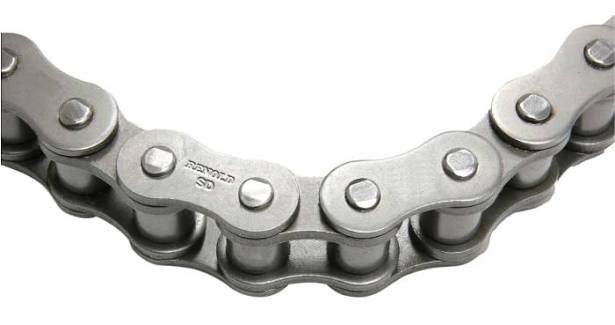
Simplex, duplex and attachment roller chains from TI Diamond, Renold, Rolon and Galaxy.

Conveyor Chains+

Conveyor Chains

View →

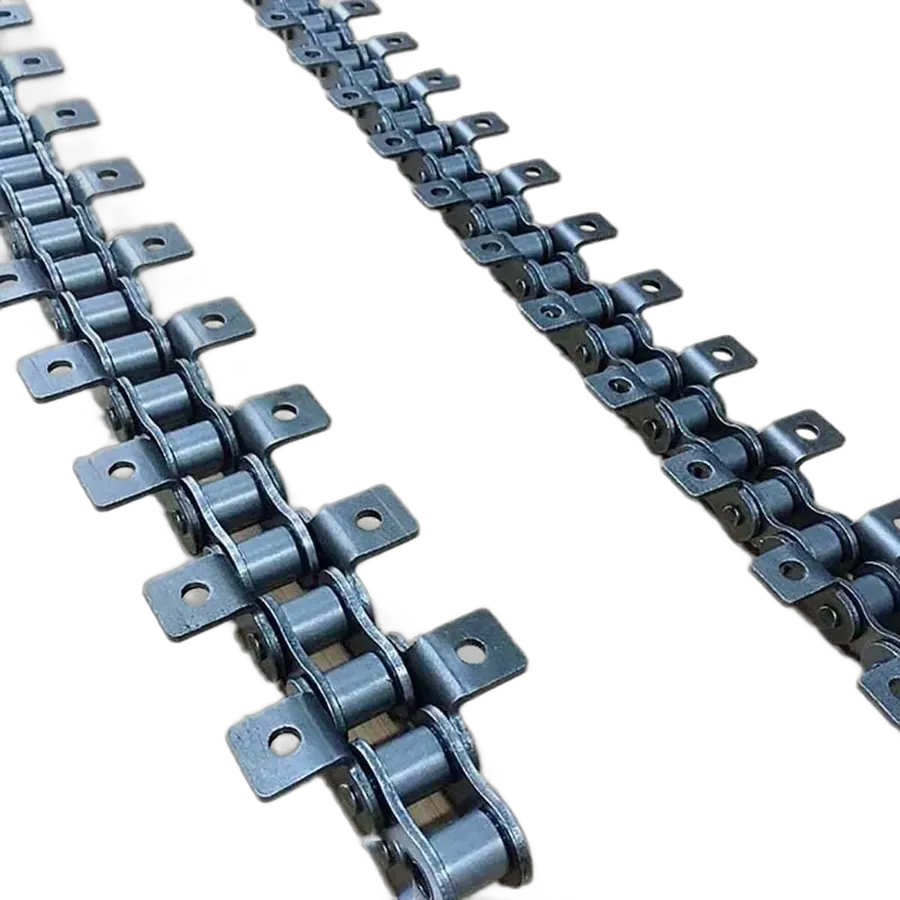
Leaf chains, conveyor chains, slat chains, drag chains, PIV gearbox chains and honeycomb wire mesh belts.

Chain Sprockets+

Chain Sprockets

View →

Simplex, duplex, triplex, double single and split sprockets for roller and conveyor chains.